Selection of the optimal gear ratio in individual pursuit on a 250 m velodrome: analysis of the coupling between chainring, cog, cadence and cruise velocity
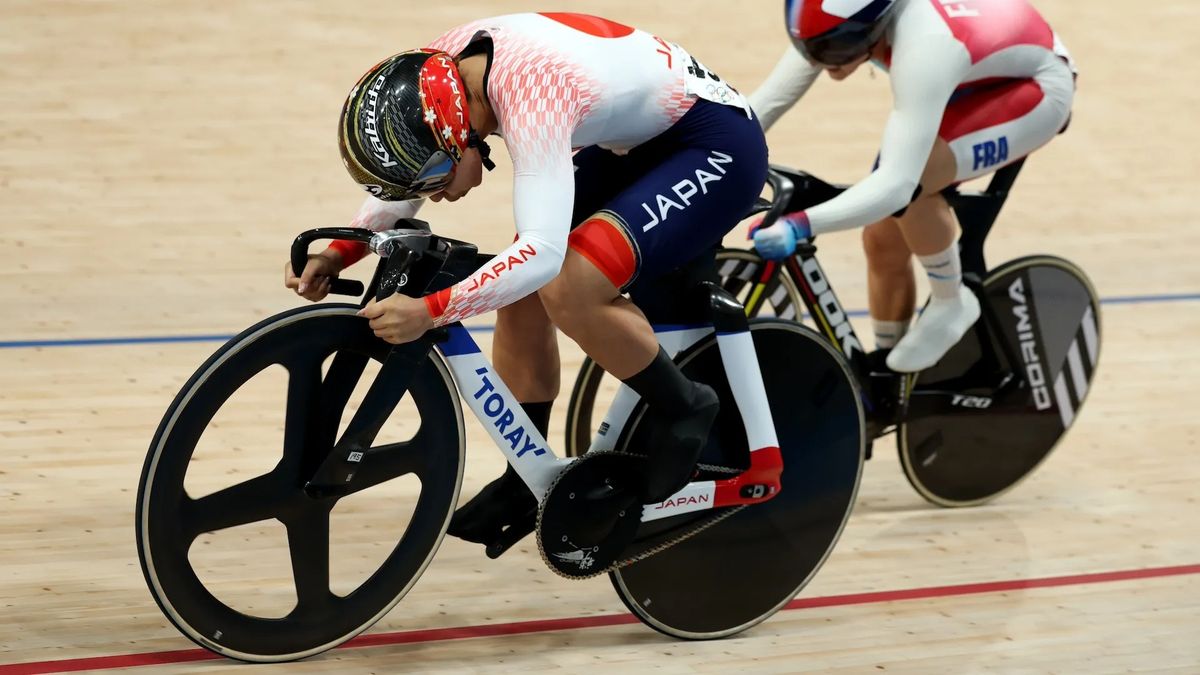
Gearing selection in individual pursuit (IP) on a 250 m velodrome does not admit decisions based on heuristics from the previous season. It constitutes an optimisation problem in four coupled variables whose resolution largely determines the athlete's chronometric mark and the depletion of the anaerobic system throughout the event (Corbett, 2009). The present article formalises the selection procedure applicable to the programming of competition equipment.
Definition of the chronometric objective and cruise velocity
The first variable to fix is the target mean velocity derived from the pursued chronometric time. In the male category, a sub-4:15 time over 4 km requires a mean velocity of 56.47 km/h; sub-4:10, 57.60 km/h; sub-4:05, 58.78 km/h. For sub-3:20 female pursuit over 3 km, mean velocity rises to 54.00 km/h. These values constitute the only valid input to the gearing calculation, since every subsequent decision remains conditioned on real cruise velocity.
Individual pursuit is not executed at constant velocity. The temporal distribution of velocity presents three identifiable phases: (i) a 10-15 s start phase with instantaneous velocity peaks above 60 km/h, (ii) a stabilisation phase converging on the mean velocity, and (iii) a fatigue drift of 0.5-1.2 % during the final kilometre (Corbett, 2009). Gearing selection must be optimised for cruise velocity, not for the start peak.
Gearing model: metres advanced per revolution
Gearing is quantified as the longitudinal displacement produced by a complete revolution of the crankset:
For a 700c wheel with a 23 mm tubular, the effective diameter is 0.668 m. A configuration of 51-tooth chainring × 14-tooth cog yields:
The target cadence closes the kinematic equation:
At 110 rpm with 7.64 m per revolution: 7.64 × 110 ÷ 60 = 14.01 m/s ≡ 50.43 km/h. Insufficient for elite male pursuit. The 54 × 14 configuration (8.09 m) provides 53.40 km/h, still suboptimal. The 54 × 13 configuration (8.71 m per revolution) reaches 57.50 km/h at 110 rpm, a value located within the sub-4:10 objective range.
Sustainable cadence window: neuromuscular basis
Optimal cadence does not constitute an idiosyncratic preference of the athlete but the manifestation of a compromise between neuromuscular efficiency and metabolic economy. The upper limit is imposed by the loss of intermuscular coordination and the increase in parasitic power of cyclic movement (Foss & Hallén, 2005); the lower limit is defined by the elevation of muscular torque per pedal stroke and the consequent preferential recruitment of type II fibres (Coyle et al., 1991). In international-level individual pursuit, the effective window falls between 105 and 115 rpm. A gear ratio requiring cadences above 118 rpm to reach target velocity compromises exercise sustainability from kilometre three.
Documented gear configurations in 250 m pursuit
| Chainring × Cog | m/revolution | km/h at 110 rpm | Characteristic application |
|---|---|---|---|
| 52 × 14 | 7.79 | 51.4 | Women's 3 km IP sub-3:30 |
| 54 × 14 | 8.09 | 53.4 | Women's 3 km IP sub-3:20 · junior IP |
| 52 × 13 | 8.39 | 55.4 | Men's IP sub-4:20 |
| 54 × 13 | 8.71 | 57.5 | Men's IP sub-4:10 |
| 56 × 13 | 9.03 | 59.6 | Elite men's IP sub-4:05 |
| 54 × 12 | 9.44 | 62.3 | Kilo TT · long sprint |
UCI roll-out regulation: mandatory verification
The Union Cycliste Internationale (UCI) establishes specific requirements on gear ratio, verified through roll-out measurement: the longitudinal distance covered by the bicycle during a complete revolution of the crankset along a rectilinear trajectory (UCI, 2024). In specific events such as the kilometre and 500 m time trial, the minimum roll-out declared by the team before the race constitutes the reference standard. Discrepancies between declared roll-out and commissaire measurement result in disqualification. Verification of competition equipment must be executed in advance of race day.
Correction for tubular effect on effective diameter
Effective wheel diameter depends on the mounted tubular and its inflation pressure. A 22 mm Dugast Pista Cotton at 10 bar deforms less than a 23 mm Vittoria Pista at 9 bar. Differences of 3-5 mm in effective diameter translate to 6-10 cm per revolution. Over the approximately 200 revolutions comprising a 4 km pursuit, the accumulated deviation ranges from 12 to 20 m. Given that chronometric marks are resolved in tenths of a second, the correction demands measurement of the actual roll-out of the competition bicycle, not the catalogue value.
Start cadence versus cruise cadence
During the first 250 m, the cyclist transits from rest to cruise velocity. Cadence starts between 60-70 rpm and converges within approximately 15 seconds to the target window. Excessively long gearing prolongs the start phase, increases anaerobic W' consumption and delays stabilisation at cruise velocity. Excessively short gearing forces cadences above 120 rpm to be sustained during the cruise phase. The operational rule is stated as follows: select the longest gearing compatible with a clean start executed in under 15 seconds.
Scientific calculation of the optimal gear ratio
AthletePro Velometrics computes gear ratio, cruise cadence and final velocity with UCI roll-out correction and tubular compensation in under 30 seconds.
Start free trialReferences: Corbett, J. (2009). An analysis of the pacing strategies adopted by elite athletes during track cycling. International Journal of Sports Physiology and Performance, 4(2), 195-205. Underwood, L., & Jermy, M. (2010). Mathematical model of track cycling: the individual pursuit. Procedia Engineering, 2(2), 3217-3222. Coyle, E. F., Feltner, M. E., Kautz, S. A., et al. (1991). Physiological and biomechanical factors associated with elite endurance cycling performance. Medicine and Science in Sports and Exercise, 23(1), 93-107. Foss, Ø., & Hallén, J. (2005). Cadence and performance in elite cyclists. European Journal of Applied Physiology, 93(4), 453-462. Union Cycliste Internationale (2024). UCI Cycling Regulations. Part 3: Track Racing, art. 3.2.024.